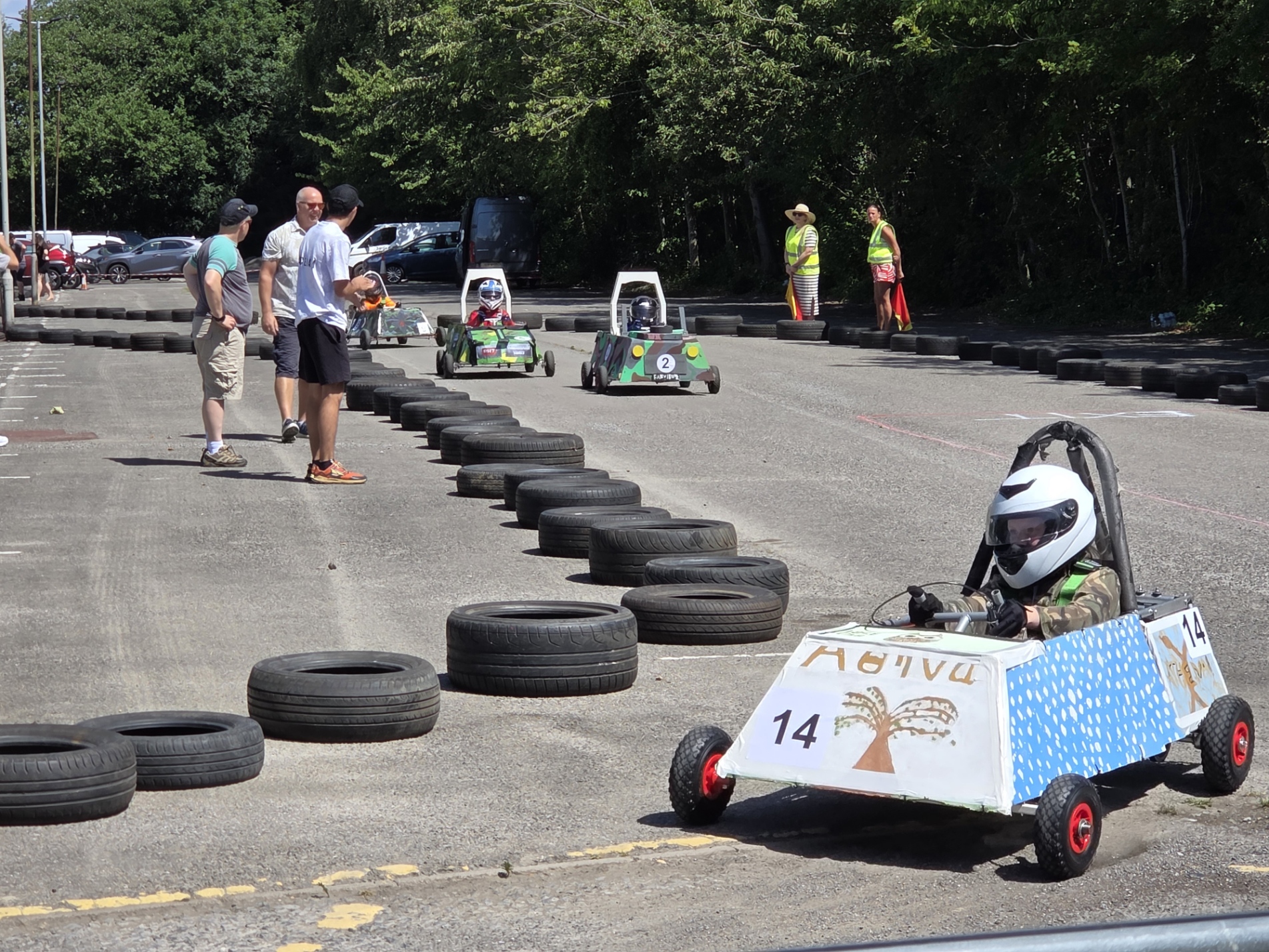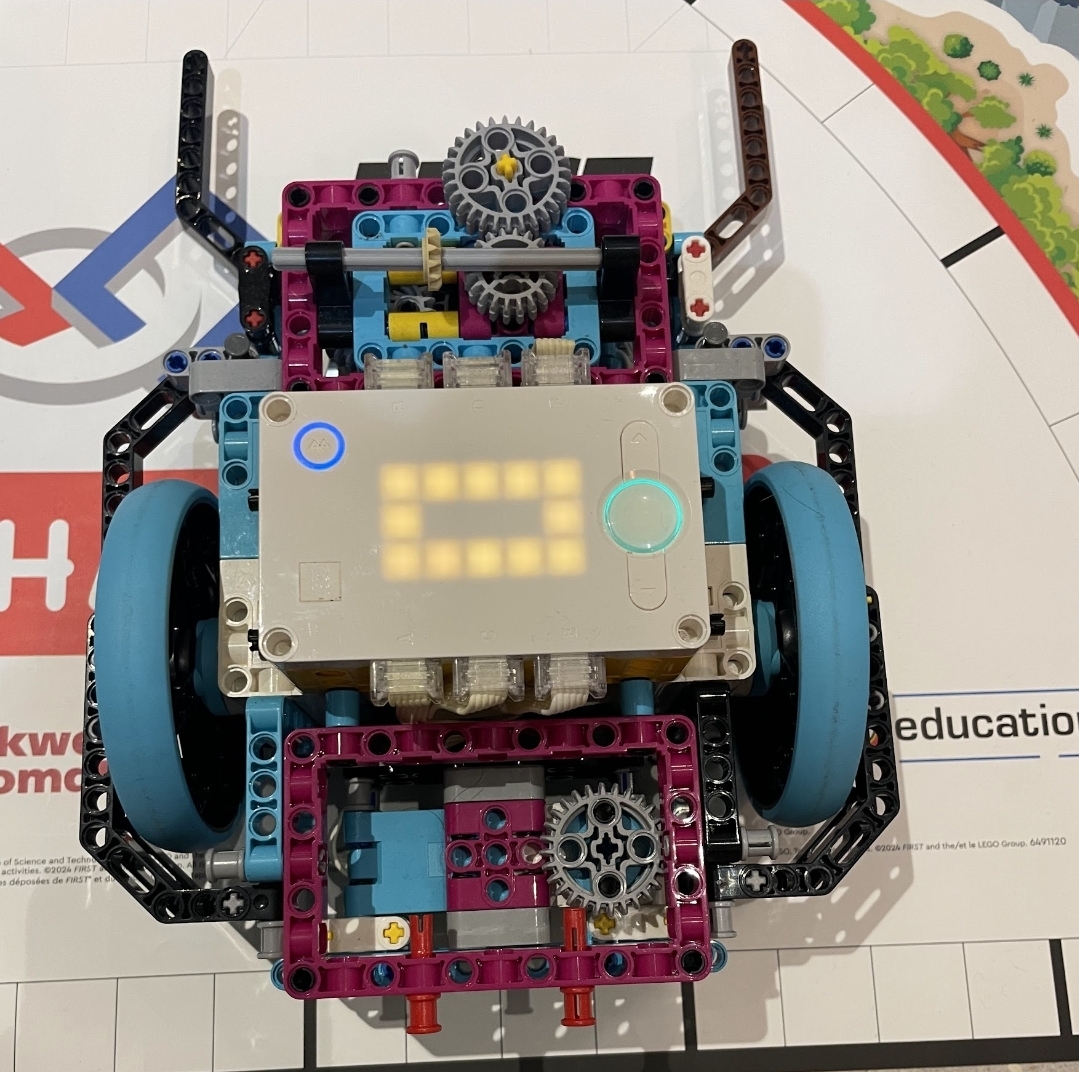
When I am not putting my coding skills to use trying to solve complex epidemiological issues, I lead a science club at a local Primary School. Each week, I teach 9-11 year olds to use Python and build and drive go karts!
Lego League: Teaching coding and science skills
Our team compete in the Kent First Lego League Tournament each year. Occasionally the team has even reached the national finals! The competition has two main parts; the Robot challenge and the innovation challenge.
Lego League Robot challenge
For the robot challenge, we receive instructions to build an obstacle course out of Lego. Once that’s complete, the children design a Lego robot. We then set to work programming. The children use a “code block” version of Python to move the robot around the obstacle course. It is far from simple and we are often up against teams of far older children…but we get there with some trial and error. I teach them about loops, functions and error handling all under the guise of playing with Lego!
Here’s a video of last year’s obstacle course!
The innovation project
The second part of the Lego League involves solving a scientific problem. In 2024 that was how best to use technology to solve problems encountered by people that explore the ocean!
We talked about how scientists conduct research, then the children researched the theme. They identified a problem and brain stormed solutions. We talked to an expert (a friendly oceanographer), and the children prepared a presentation. They took their slide deck to the competition at Canterbury Christchurch University, and presented their solution to a judges panel of academics and engineers. They answered some tough questions - quite a daunting task when you’re 9!!
Go karts
After the Lego League finishes we pack away and change gear (metaphorically, our go karts only have one speed - fast!)
The children compete in the Young Eco Engineers go kart race. This starts with building the Go Kart from a kit. The children learn to drill, cut and screw, to measure and use a wide range of tools. We then choose a theme and decorate the kart. They spend hours on the playground honing their driving skills as well as time indoors writing in their engineering workbooks. The engineering workbooks ask about key engineering principles, the environment, team work, and kart design. Finally, race day comes! The adults drive to Gillingham, and the children race against 11 other teams around a circuit. There is always drama on the track, but our mini-racers stay cool and collected and often bring home a trophy!